Your Zip Code May Be More Powerful Than Your Genes for Heart Health
Lisa Bos ·
Listen to this article~4 min
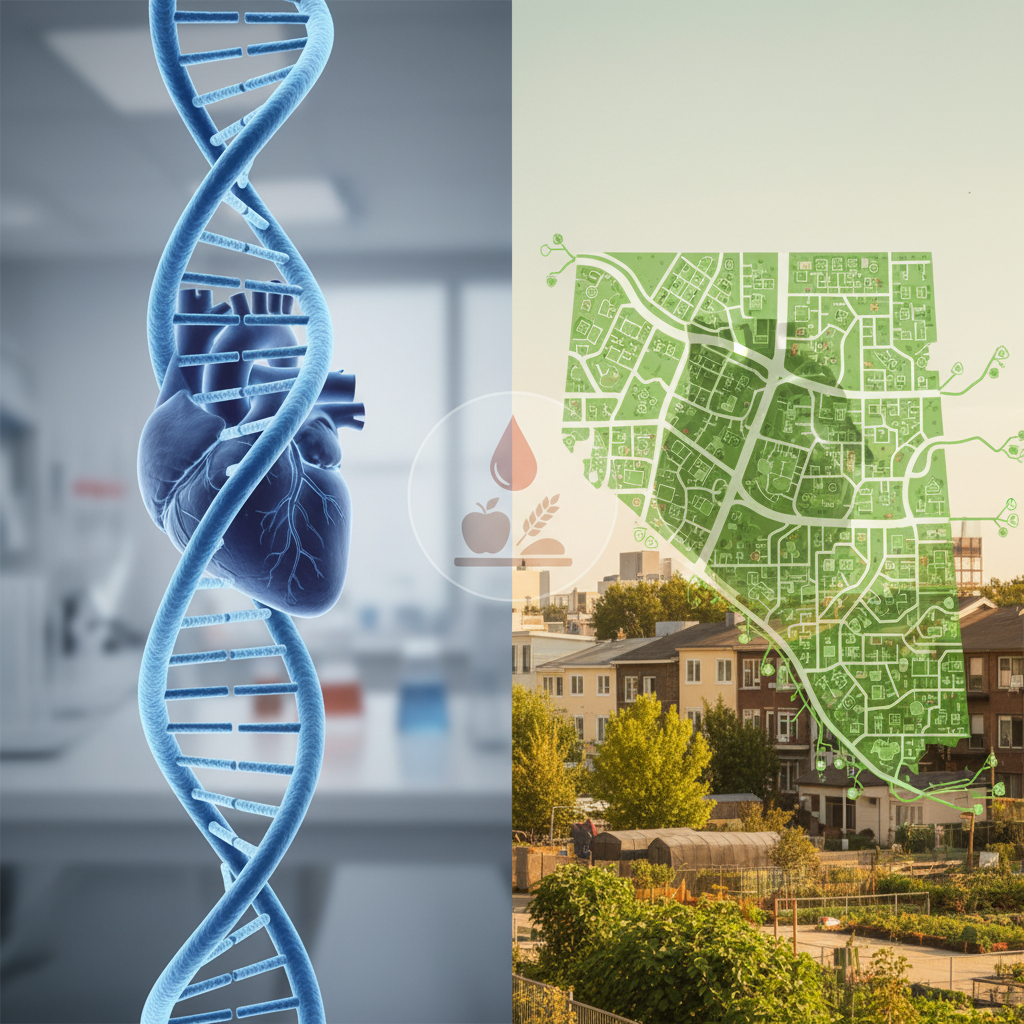
Your zip code might be more powerful than your genes when it comes to heart disease. Discover how where you live impacts your cardiovascular health and what you can do about it.
### The Hidden Link Between Where You Live and Your Heart Health
You've probably heard it a thousand times: your genes determine your destiny. But what if I told you that your zip code might actually have a bigger impact on your heart health than your DNA?
That's right. Recent research has uncovered a startling truth. People living in the poorest neighborhoods are far more likely to develop heart disease and stroke. And it's not because of some genetic lottery. It's because of the environment they live in every single day.
Let's break this down in a way that actually makes sense.
### Why Your Address Matters More Than Your Genes
Think about it. Your genes are basically a blueprint. But the house built from that blueprint depends on the materials available. If you live in a neighborhood with limited access to fresh fruits and vegetables, no safe places to walk or exercise, and high stress levels from financial instability, that blueprint doesn't stand a chance.
Studies show that people in low-income areas have significantly higher rates of cardiovascular disease. And it's not just about income. It's about the whole package:
- Limited access to grocery stores with healthy food options
- Fewer parks or safe sidewalks for physical activity
- Higher exposure to air pollution and environmental toxins
- More fast food restaurants than fresh food markets
- Greater chronic stress from financial and social pressures
These factors stack up. They create a perfect storm for heart problems.
### The Numbers Don't Lie
Here's something that might surprise you. The difference in heart disease risk between wealthy and poor neighborhoods can be as stark as 30 to 50 percent. That's not a small gap. That's a chasm.
And here's the kicker: even if you have perfect genes, living in a disadvantaged area puts you at higher risk. Your zip code literally overrides your genetic code.
### What This Means for You
So what can you do if you live in an area that's not set up for heart health?
First, don't panic. Awareness is the first step. You can start making small changes right now:
- **Walk wherever you can.** Even 15 minutes a day helps.
- **Choose water over soda.** Simple swap, big impact.
- **Cook at home more.** You control the ingredients.
- **Find a community garden.** Fresh produce without the markup.
- **Manage stress.** Deep breathing, meditation, or just a quiet moment.
But this isn't just about individual choices. It's about community action. When neighborhoods come together to demand better grocery stores, safer parks, and cleaner air, everyone benefits.
### The Bigger Picture
This isn't a blame game. It's a wake-up call. We need to stop thinking of heart disease as a personal failure and start seeing it as a community issue. Your health isn't just about what you eat or how much you exercise. It's about where you live, work, and play.
So next time you hear someone say "it's all in your genes," remember this: your zip code might be the most powerful health predictor you never knew you had.
Take care of your heart. And take care of your neighborhood. They're more connected than you think.
*For more information on how your environment affects your health, talk to your healthcare provider or check out local community health resources.*