The Surprising Reason Social Media Affects Teen Mental…
Lisa Bos ·
Listen to this article~4 min
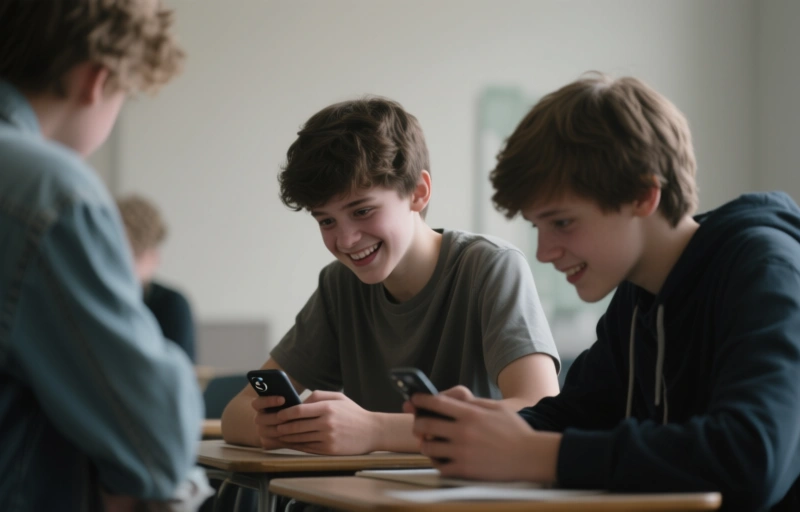
Forget cyberbullying and filters. The biggest impact of social media on teen mental health might be what it replaces: vital real-world connection, boredom, and activities that build true resilience.
We talk a lot about social media and mental health. You've probably heard the usual suspects: cyberbullying, unrealistic beauty standards, the endless scroll that steals sleep. But what if I told you there's another factor at play? One that's more subtle, yet just as powerful. It's not what most people think.
It's not about the content they see. It's about what they don't do while they're seeing it.
### The Missing Piece: Displacement
Think about it for a second. A teenager spends three, four, maybe five hours a day on their phone. That's time that has to come from somewhere. It's not like we're adding extra hours to the day. That time gets pulled from other activities. Important ones.
We're talking about the activities that actually build resilience and well-being. The stuff that doesn't happen through a screen.
- Face-to-face time with friends and family
- Playing sports or just moving their bodies
- Reading a book for fun
- Getting bored and letting their mind wander
- Practicing a hobby or learning a skill with their hands
When social media displaces these real-world experiences, that's where the real damage happens. It's a quiet trade-off, and most kids don't even realize they're making it.
### Why Real-World Connection Matters
Our brains are wired for connection. The genuine kind. The kind where you hear a laugh, see a smile, or feel a pat on the back. Those interactions release chemicals like oxytocin. They reduce stress. They make us feel like we belong.
A 'like' or a heart emoji? It gives a tiny, fleeting dopamine hit. It's a cheap substitute. It doesn't fill the same tank. Over time, relying on digital validation can leave a kid feeling oddly empty, even if they have thousands of followers.
As one researcher put it, "We're confusing connection with communication." We're communicating more than ever, but are we truly connecting? Often, the answer is no.
### The Power of Boredom (Really!)
Here's another casualty of constant scrolling: boredom. It sounds counterintuitive, but boredom is crucial for development. It's in those unstructured, screen-free moments that creativity sparks. That's when kids figure out who they are outside of an algorithm's suggestions.
When every spare second is filled with a TikTok video or an Instagram story, that space for self-discovery vanishes. The mind never gets a chance to just... be. To wander. To imagine. That constant stimulation can actually increase anxiety and make it harder to focus on anything for very long.
### What Can We Do About It?
This isn't about banning phones. That's not realistic. It's about being more mindful of the trade-off. It's about helping kids—and ourselves—reclaim some of that displaced time.
Start small. Maybe it's a "no phones at the dinner table" rule. Or setting aside one hour before bed as screen-free time. Encourage an old-fashioned hobby. Suggest a walk without the purpose of taking a photo for a story.
The goal isn't to live offline. It's to create a better balance. To ensure that the rich, messy, rewarding experiences of real life aren't getting crowded out by the curated, passive experience of life online. That's the surprising key. It's less about policing what they see, and more about protecting the time for what they need to do and feel to stay healthy.