The Surprising Link Between Cats and Cancer Risk
Lisa Bos ·
Listen to this article~4 min

Exploring the nuanced scientific discussion around a parasite some cats carry and its observed association with certain cancer risks. Learn the facts, context, and simple preventive steps for pet owners.
You know that feeling when you're curled up with your cat, listening to that comforting purr? It's pure relaxation. But what if I told you there's been some serious scientific chatter about a potential link between our feline friends and cancer risk? It's a topic that might make you pause mid-purr.
Let's unpack this carefully, because it's more nuanced than a simple cause-and-effect story. The conversation isn't about cats directly causing cancer. That would be far too simplistic. Instead, researchers have been looking at a specific parasite some cats can carry, and how that might influence our body's environment.
### Understanding the Parasite Connection
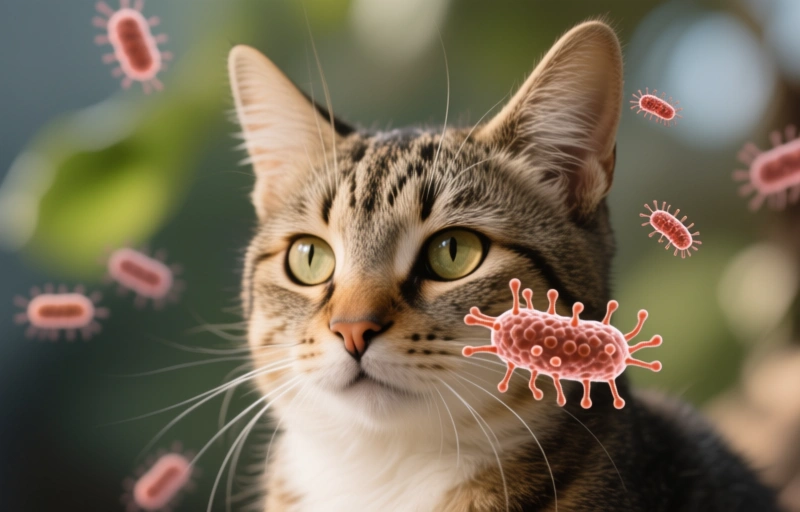
The main character in this discussion is *Toxoplasma gondii*. It's a microscopic parasite that can infect many warm-blooded animals, including cats. Cats are actually the primary host, meaning the parasite completes its life cycle in them. Humans can become infected too, often through contact with contaminated cat litter or soil, or by eating undercooked meat.
Now, here's where it gets interesting. Some studies have suggested a possible association between chronic *T. gondii* infection and an increased risk of certain cancers, particularly brain cancers like glioma. The theory isn't that the parasite itself is carcinogenic. Instead, scientists think the long-term, low-grade inflammation caused by a persistent infection might create conditions that could, over many years, contribute to cancerous changes in cells.
It's a bit like having a small, smoldering fire in your backyard for decades—it changes the landscape. The key word here is "association." It's a correlation researchers have observed, not a proven causation. Many people with the infection never develop cancer, and many with cancer have never been infected.
### What Does This Mean for Cat Owners?
First, don't panic. This isn't a reason to rehome your beloved pet. The absolute risk, if any, appears to be very small for the average person. The research is still in its early, observational stages. Think of it as scientists spotting a faint pattern and deciding to look closer with a magnifying glass.
Good hygiene is your best defense, as it is for so many things. Here are some simple, practical steps you can take:
- Clean the litter box daily. The parasite needs 1 to 5 days in the litter to become infectious.
- If you're pregnant or immunocompromised, have someone else handle litter duty.
- Always wash your hands thoroughly with soap and water after gardening or handling soil.
- Cook meat to a safe internal temperature to kill any potential parasites.
- Keep your cat indoors to prevent it from hunting rodents, which can be a source of infection.
These are just sensible habits that protect against a variety of potential issues, not just this one.

### The Bigger Picture on Cancer Causes
It's crucial to keep this in perspective. When we talk about cancer risk, we're talking about a complex interplay of factors. As one researcher aptly put it, "Cancer is rarely about one villain; it's about a perfect storm of genetics, environment, and chance."
Established, major risk factors for cancer still vastly outweigh any potential link to pets. These include:
- Smoking
- Excessive alcohol consumption
- Poor diet and obesity
- Lack of physical activity
- Excessive sun exposure
- Certain genetic predispositions
Focusing on these lifestyle factors will have a far greater impact on your long-term health than worrying about your cat. The potential benefits of pet ownership—reduced stress, companionship, increased physical activity—are well-documented and significant for overall wellbeing.
The bottom line? Love your cat. Practice good hygiene. And remember that science is a process of asking questions, not always having immediate answers. This research is a reminder of the fascinating and complex connections in our world, even between our cozy companions and our cellular health. The most important step is to stay informed, not fearful, and to make choices based on a full picture of the evidence.