Sharks Test Positive for Drugs in Bahamas Waters
Lisa Bos ·
Listen to this article~4 min
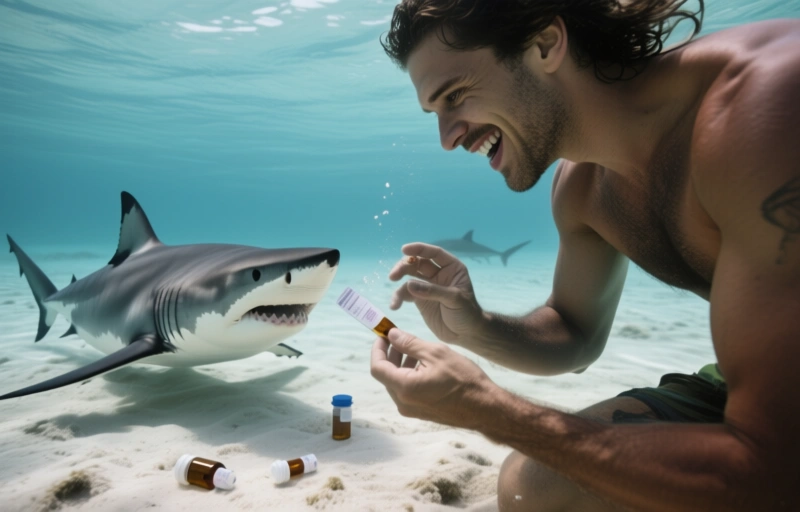
Following findings in Brazil, sharks in the Bahamas have tested positive for traces of pharmaceuticals and illicit drugs, highlighting a startling new form of ocean pollution.
You know, sometimes you read a headline that makes you do a double-take. Sharks testing positive for drugs? It sounds like something from a bizarre sci-fi movie, not real ocean science. But here we are.
Following similar findings off the coast of Brazil, researchers have now detected traces of pharmaceuticals and illicit substances in sharks swimming near the Bahamas. It's a startling discovery that raises more questions than it answers.
### What Are We Finding in These Sharks?
The specifics are still emerging, but initial reports suggest a cocktail of substances. We're talking about traces of prescription medications, like antidepressants and painkillers, along with compounds from recreational drugs. These aren't massive doses, mind you—we're not talking about sharks on a bender. But the mere presence is what's alarming scientists.
How does this even happen? Well, it's a classic case of what goes around, comes around. Our wastewater treatment systems, while advanced, aren't perfect at filtering out every single chemical compound we flush or discard.
- Medications pass through our bodies and enter the sewage system.
- Illicit drugs can be introduced through similar pathways or direct contamination.
- These substances eventually make their way to the ocean, entering the marine food web.
Sharks, being apex predators, accumulate these compounds over time. They're at the top of the food chain, so everything eaten by their prey can potentially end up concentrated in their bodies.
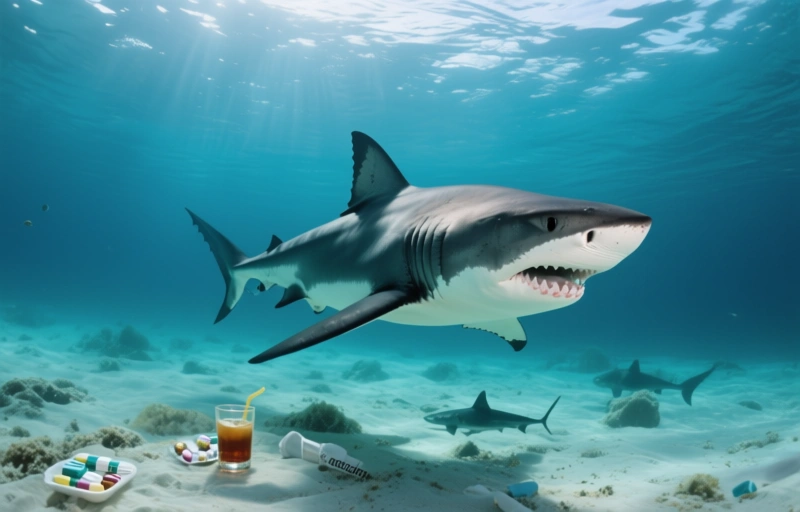
### Why Should We Care About Drugged Sharks?
It's easy to think this is just a weird ocean story with no impact on us. But that's not quite right. The health of an apex predator is a direct reflection of the health of their entire ecosystem. If sharks are accumulating pharmaceuticals, so are the fish they eat, and potentially the fish we eat.
This isn't just about sharks. It's a bright red warning light about how our chemical footprint extends far beyond our cities and towns. Our actions on land have a direct, measurable impact on life hundreds of miles offshore.
One researcher put it bluntly: 'Finding these biomarkers in sharks is like finding the canary in the coal mine has a headache. It tells us the environment itself is under a new kind of stress.'
### What Happens Next?
The discovery in the Bahamas will likely spur more testing in other regions. Scientists want to understand the scope. Is this a localized issue near populated areas, or a more widespread oceanic phenomenon?
The bigger question is what long-term effects these substances have on shark biology, behavior, and reproduction. Even subtle changes at the top of the food chain can ripple through an entire marine community.
For us, it's a reminder of our interconnectedness with the natural world. The choices we make about what we consume and how we dispose of waste don't just disappear. They have a journey, and sometimes that journey ends in the gills of a tiger shark.
It's a complex problem without a simple solution. Better wastewater filtration is part of it. More responsible pharmaceutical disposal is another. But first, we need awareness. We need to understand that the ocean isn't a limitless dumping ground—it's a living system, and we're now finding our signature in its most powerful inhabitants.