Sepsis Coordinator Warns of 'Silent Killer': 'I Feel Like I'm Dying'
Lisa Bos ·
Listen to this article~4 min
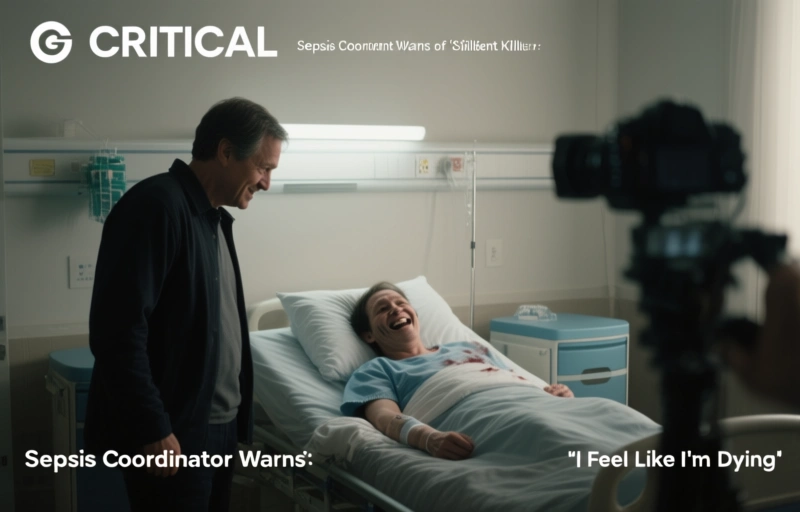
A new sepsis coordinator warns that the 'silent killer' can strike fast. Learn the early signs, who's at risk, and why patients say 'I feel like I'm dying.' This is a must-read for everyone.
### The Silent Killer: What You Need to Know About Sepsis
Sepsis is often called a 'silent killer' because it creeps up fast. One moment you're fighting a simple infection, the next your body is in overdrive. A new sepsis coordinator is now warning everyone: this condition doesn't always announce itself loudly.
Some patients say they just 'feel' something is wrong. They might say, 'I feel like I'm dying.' That's not drama. It's a real warning sign your body is giving you. We need to listen.
### Why Sepsis Is So Dangerous
Sepsis happens when your immune system goes haywire while fighting an infection. Instead of just attacking the germs, it starts attacking your own organs. This can lead to organ failure, tissue damage, and even death.
And here's the scary part: it can happen to anyone. A small cut, a urinary tract infection, or even pneumonia can spiral into sepsis. It's not just a hospital problem. It can start at home.
### Early Warning Signs You Can't Ignore
You don't need to be a doctor to spot sepsis. But you do need to know what to look for. The coordinator emphasizes that time is tissue. Every minute counts.
- **Confusion or disorientation** – Someone might seem 'off' or not themselves.
- **Rapid breathing** – More than 22 breaths per minute is a red flag.
- **Extreme pain** – Not just discomfort, but a feeling of 'I'm going to die.'
- **Clammy or sweaty skin** – Even if they don't have a fever.
> "Some patients say literally: 'I feel like I'm going to die.' That's a real symptom." – Sepsis Coordinator
### Who Is at Risk?
Anyone can get sepsis, but some people are more vulnerable. If you or a loved one falls into one of these groups, be extra careful:
- People over 65 years old
- Infants and young children
- Those with chronic illnesses like diabetes or kidney disease
- Anyone with a weakened immune system
- People who've recently had surgery or a hospital stay
### What to Do If You Suspect Sepsis
If you think someone has sepsis, don't wait. Call 911 or get to an emergency room immediately. This isn't something you can treat at home with rest and fluids. It requires medical intervention fast.
Doctors will likely start IV antibiotics and fluids right away. They might also run blood tests to find the source of the infection. The sooner treatment starts, the better the chances of survival.
### A Personal Note: Why This Matters
I've seen families torn apart by sepsis. It's not just a statistic. It's a mother, a father, a child. The coordinator's warning is a wake-up call for all of us. We need to take infections seriously and know the signs.
You don't have to be a medical expert. Just be aware. Trust your gut. If something feels wrong, it probably is. And that feeling of 'I'm going to die' is not something to brush off.
### Final Thoughts
Sepsis is a medical emergency. It's fast, it's silent, and it's deadly. But with awareness and quick action, we can save lives. Share this information with your friends and family. You never know when it might make a difference.
Stay safe, stay informed, and always listen to your body. It knows when something is off.