No Link Between Mom's Diet While Breastfeeding and Baby…
Lisa Bos ·
Listen to this article~4 min
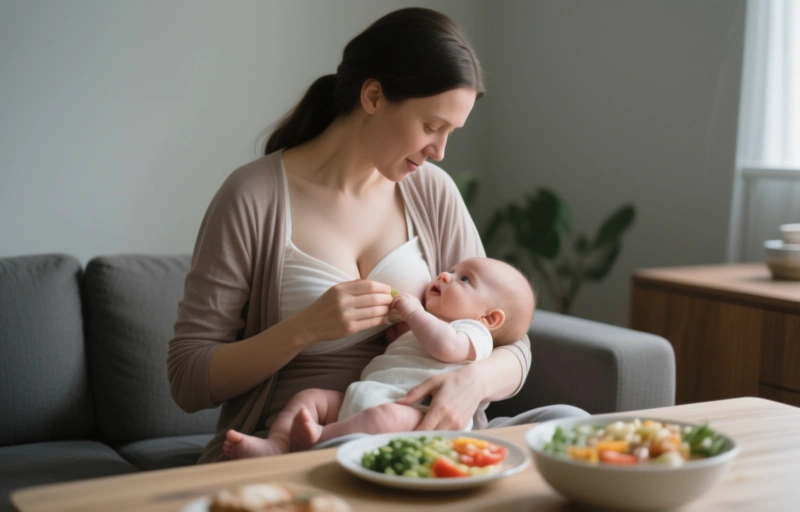
New research challenges common advice, finding no significant link between a mother's diet while breastfeeding and her baby developing eczema or food allergies.
If you're a new mom who's been stressing over every bite you take while breastfeeding, worried it might cause eczema or food allergies in your baby, I've got some news that might let you breathe a little easier. A recent study is turning some common advice on its head, and honestly, it feels like a weight lifted for so many parents.
For years, the message has been pretty clear—what you eat passes through your breast milk and can trigger allergic reactions in your little one. I've talked to countless moms who eliminated dairy, avoided nuts, and cut out eggs, all in hopes of protecting their baby's sensitive skin and immune system. It's exhausting, isn't it? The constant vigilance, the restrictive diets, the guilt when you slip up.
But here's the thing. New research suggests we might have been overcomplicating this. The study found no significant link between a mother's diet during breastfeeding and the development of eczema or food allergies in her infant. Let that sink in for a moment.
### What the Research Actually Says
The study followed a large group of mother-baby pairs from pregnancy through the infant's first year. Researchers tracked maternal diets meticulously and monitored babies for any signs of atopic dermatitis (that's the medical term for eczema) and confirmed food allergies. The results were pretty clear-cut. Whether moms ate common allergens or avoided them completely didn't statistically change their baby's risk.
Now, this doesn't mean diet is completely irrelevant to your baby's health—far from it. Good nutrition matters for your own wellbeing and milk production. But it does suggest that strictly avoiding potential allergens during breastfeeding isn't the protective shield we once thought.
### Why This Matters for Real Parents
Think about the practical implications here. So many breastfeeding mothers have been told:
- Cut out all dairy if your baby has gas or fussiness
- Avoid peanuts and tree nuts completely
- Eliminate eggs, soy, and wheat as precautionary measures
This advice often comes from well-meaning pediatricians, lactation consultants, and even family members. But what if it's creating unnecessary stress and nutritional gaps for mothers without actually helping babies? That's what this research is making us question.
As one researcher noted, "We need to be careful about blanket recommendations that increase maternal anxiety without clear evidence of benefit."
### What Should You Actually Focus On?
If avoiding specific foods isn't the key to preventing allergies, what does help? The current science points to a few evidence-based approaches:
- Introducing common allergens to babies at the appropriate age (around 4-6 months, with pediatrician guidance)
- Maintaining good skin barrier function with proper moisturizing
- Considering probiotics during pregnancy and infancy
- Focusing on overall dietary diversity rather than elimination
### The Bottom Line for Breastfeeding Moms
Here's my takeaway after looking at this research and talking with colleagues in pediatric nutrition. Your diet matters, but not in the restrictive way we've been emphasizing. Instead of worrying about cutting foods out, focus on:
- Eating a balanced, varied diet that keeps you energized
- Staying hydrated—breastfeeding is thirsty work
- Getting enough calories to support milk production
- Listening to your own body's needs
If you notice your baby seems consistently uncomfortable after you eat a particular food, by all means, discuss it with your pediatrician. But the days of preemptively eliminating entire food groups during breastfeeding? They might be coming to an end, and honestly, that's probably good news for everyone's sanity.
Parenting is hard enough without adding unnecessary food restrictions to the mix. This research gives us permission to feed ourselves well while feeding our babies, and that's a relief worth celebrating.