Maduro's Son Claims President Maintains Excellent Health
Lisa Bos ·
Listen to this article~4 min
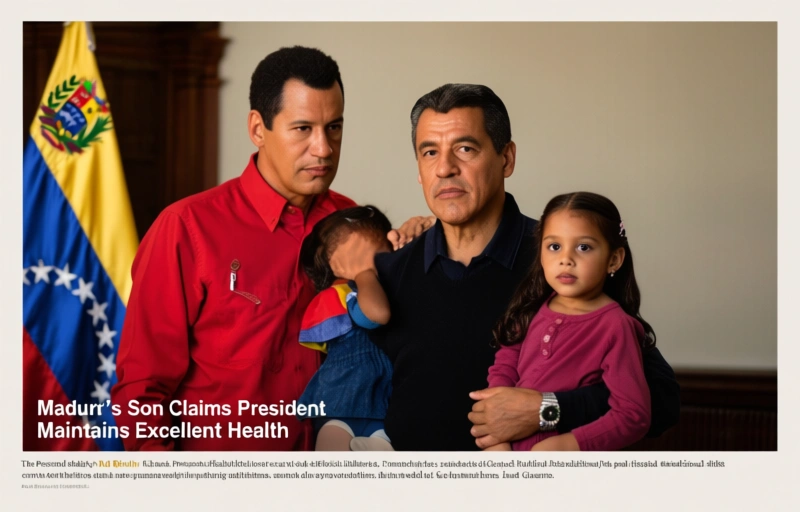
Venezuelan President Nicolás Maduro's son claims his father is in excellent health, describing him as a slender, athletic leader who trains daily, highlighting the personal narratives that shape public perception of political figures.
You know how sometimes family members give you the most honest health updates? Well, that's exactly what's happening with Venezuelan President Nicolás Maduro. His son, Nicolás Maduro Guerra, recently made some pretty bold claims about his father's physical condition. He described the president as being in "excellent health," calling him a "slender, athletic president who trains every day."
Now, that's quite a statement, isn't it? It's the kind of thing that makes you pause and think. When a leader's health becomes a topic of public discussion, it often reflects broader concerns about stability and governance. In this case, the comments come directly from a family member, which adds a personal layer to the political narrative.
### The Personal Health Narrative
Family testimonials about health can be powerful. They feel more intimate than official medical bulletins. Maduro Guerra's description paints a picture of discipline and vitality—a leader who prioritizes his physical well-being despite the immense pressures of his role. He specifically mentioned daily training, which suggests a consistent routine.
We all know maintaining a regular exercise regimen is tough with a busy schedule. The implication here is that the president has the energy and dedication to do it. This narrative isn't just about health metrics; it's about projecting an image of strength and endurance to both domestic and international audiences.
### Why Leader Fitness Matters Publicly
Public perception of a leader's health isn't just gossip. It often ties directly to confidence in their ability to govern. Think about it—when citizens or foreign officials question a leader's physical capacity, it can lead to speculation about succession, policy continuity, and national direction.
- A leader perceived as healthy and vigorous may project stability.
- Questions about health can sometimes fuel political uncertainty.
- Personal fitness routines are often used as metaphors for disciplined leadership.
In many countries, the health of heads of state is considered a matter of national security. That's why these personal accounts, while informal, carry significant weight. They fill an information gap that official channels sometimes leave open.
### The Bigger Picture
Let's be real for a second. When a family member speaks out, it's rarely just about sharing health news. There's usually a context. In politically charged environments, such statements can serve to counter rumors, reassure allies, or reinforce a particular image. It's a reminder that in politics, the personal is almost always political.
The description of a "slender, athletic" leader training daily is very specific. It's designed to be visual and convincing. Whether you believe it or not, it becomes part of the story people tell about that leadership. And in today's world, narrative is everything.
As one political analyst recently noted off the record, "Health claims from inner circles are less about medicine and more about messaging." That's a perspective worth considering. The facts of a medical check-up are one thing; the story told about it is another.
### What We Can Take Away
So, what does this mean for the average person following the news? It's a case study in how personal information becomes public currency. It reminds us to look at the source, consider the timing, and think about the intended audience. Health is a universal concern, but when it's about a world leader, it's never just a private matter.
Ultimately, while Maduro's son has offered this personal health assessment, it exists within a complex web of political communication. It's a single thread in a much larger tapestry of global affairs. And like any personal story injected into the public sphere, it will be interpreted, debated, and remembered as part of a larger legacy.