Hugo de Jonge's Mask Advice and Elderly Care Lobby
Lisa Bos ·
Listen to this article~5 min
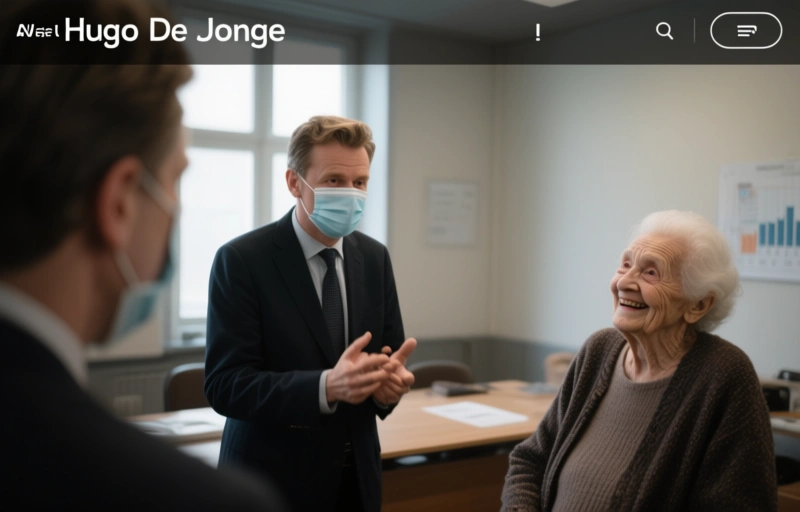
Learn how Dutch minister Hugo de Jonge's mask advice was influenced by elderly care lobbying, and what it means for public trust in health decisions.
During the height of the COVID-19 pandemic, public health decisions were often influenced by a complex mix of science, politics, and lobbying. A recent report reveals that Dutch Coronaminister Hugo de Jonge advised against wearing face masks after lobbying from the elderly care sector. This has sparked new debates about transparency and decision-making during a global health crisis.
### The Backstory on Mask Recommendations
When the pandemic first hit, there was a lot of confusion about masks. Early on, many health officials, including de Jonge, recommended against widespread mask use. The reasoning? They worried that masks would give people a false sense of security and that the general public wouldn't use them correctly. But as the virus spread, it became clear that masks were a key tool in slowing transmission.
Now, we're learning that de Jonge's stance might have been shaped more by lobbying than by pure science. According to the report, representatives from the elderly care sector pushed hard against mask mandates. They argued that masks would make communication harder for seniors and could lead to other issues in care facilities.
### Why This Matters for Public Trust
Here's the thing: when decisions about public health are made behind closed doors, it erodes trust. People want to know that their leaders are acting in their best interest, not just responding to the loudest voices in the room. In the United States, we've seen similar debates play out with everything from school closures to vaccine mandates.
- **Transparency is key:** The public needs clear, honest explanations for policy changes.
- **Science should lead:** While lobbying is a reality, it shouldn't override evidence-based recommendations.
- **Trust takes time to build:** Once broken, it's hard to repair.
### The Elderly Care Perspective
Let's be fair to the elderly care sector. Their concerns weren't baseless. For many seniors, especially those with hearing loss, masks can be a real barrier. They rely on lip reading and facial expressions to communicate. So, when you add a mask to the mix, it can make them feel isolated and confused.
But here's the question: Should those concerns have outweighed the potential benefits of masking? In a pandemic, you're always balancing risks. The virus itself was a huge risk for elderly populations. So, maybe the better approach would have been to find creative solutions—like clear masks or better communication tools—rather than just saying no to masks altogether.
### Lessons for the US Healthcare System
This story isn't just about the Netherlands. It's a reminder for all of us, including healthcare professionals in the United States, that we need to stay vigilant. When you're dealing with something as serious as a global pandemic, every decision matters.
> "Public health is not just about medicine; it's about trust, communication, and making sure everyone's voice is heard—without letting any single voice drown out the science."
For professionals working in allergies, blood testing, and diagnostics, this is especially relevant. Accurate information and clear guidelines are the foundation of good patient care. If the public loses faith in health authorities, it becomes much harder to get people to follow important recommendations—whether that's getting a blood test for food allergies or wearing a mask during a respiratory outbreak.
### Moving Forward
We can't change what happened in the past, but we can learn from it. Going forward, health officials need to be more transparent about how decisions are made. They should also be willing to adapt as new evidence comes in. The pandemic taught us that science evolves, and our policies need to evolve with it.
For now, this story serves as a cautionary tale. It shows us that even well-intentioned lobbying can lead to decisions that might not be in the public's best interest. And it reminds us that, in healthcare, we always need to put the patient first—whether that patient is a senior in a care home or a child with a peanut allergy.
So, what can you do? Stay informed. Ask questions. And don't be afraid to speak up when you see something that doesn't add up. Because at the end of the day, we're all in this together.