How Your Scar Heals: Dermatologist Tips for Better Results
Lisa Bos ·
Listen to this article~4 min
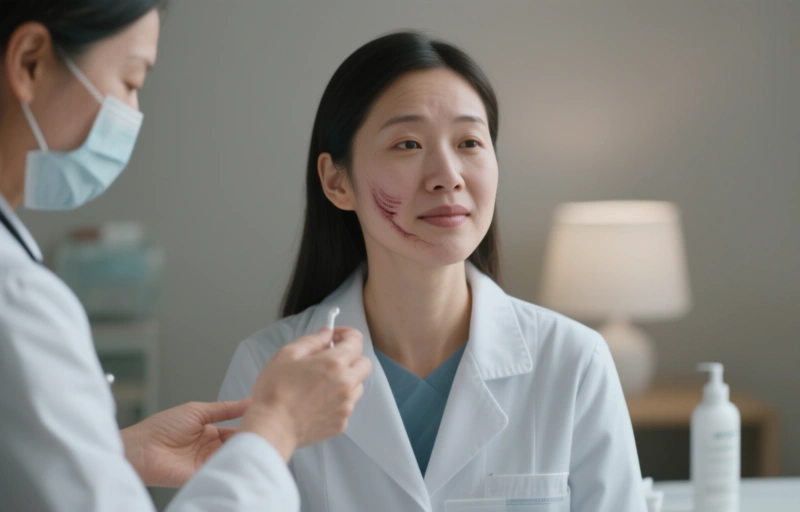
You have more control over scar healing than you think. A dermatologist explains why simple habits, like avoiding certain facial movements, can lead to significantly better results and less noticeable scars.
You know that feeling when you get a cut or scrape? You're probably already thinking about the scar it might leave behind. Well, here's some good news: you have more control over how that scar looks than you might think. It's not just about genetics or luck. Your daily habits and the care you give that healing skin play a huge role.
I was talking with a dermatologist recently, and she shared a surprising piece of advice. She said, "Don't bite into an apple if you have a facial scar that's still healing." It sounds odd at first, right? But it makes perfect sense when you think about it. That pulling motion stretches the delicate new skin, which can lead to a wider, more noticeable scar.
### Understanding the Scar Healing Process
Scar formation is your body's incredible way of repairing itself. When you get a wound, your body rushes collagen to the site to patch things up. But this new tissue isn't quite the same as your original skin. It's often thicker, less flexible, and can look different. The goal of scar care is to guide this process so the new tissue blends in as much as possible.
The first few weeks are absolutely critical. This is when the foundation of your scar is being laid down. What you do—or don't do—during this time can set the stage for years to come.
### Practical Tips for Better Scar Healing
So, what can you actually do? It's simpler than you might expect. Here are some key habits to adopt:
- **Keep it clean and moist.** A dry wound forms a scab, which is like a biological bandage. But scabs can actually slow healing and lead to worse scarring. Using a simple petroleum jelly or a silicone-based gel keeps the area moist, which promotes better healing.
- **Protect it from the sun.** This is non-negotiable. New scar tissue is extremely sensitive to UV rays. Sun exposure can darken a scar permanently, making it stand out more. Use a broad-spectrum sunscreen with at least SPF 30, and keep it covered with clothing or a bandage when you're outside.
- **Avoid tension and pressure.** Remember the apple advice? It's all about avoiding mechanical stress. Any activity that pulls, stretches, or puts pressure on the healing area can widen the scar. Be mindful of your movements.
- **Massage gently.** Once the wound is fully closed (no scab, just smooth skin), gentle massage can help. Use a moisturizer and massage the scar for a few minutes daily. This can help soften the tissue and break up any collagen that's forming in a disorganized way.
### The Mindset for Healing
Patience is your best friend here. Scars can take a full year or even longer to fully mature and fade. It's a marathon, not a sprint. Don't get discouraged if you don't see dramatic changes in the first month. Consistent, gentle care is what wins the race.
It's also worth remembering that scars tell a story. While we can work to minimize their appearance, a little mark here and there is a sign of a life lived. The goal isn't necessarily perfection, but supporting your skin's natural ability to heal as well as it can.
If you're ever concerned about a scar, especially if it's painful, itchy, or continues to grow, don't hesitate to see a board-certified dermatologist. They have tools and treatments that can help when basic care isn't enough. But for most everyday cuts and scrapes, these simple strategies put the power for better healing right in your own hands.