How Sander's Brothers Help Him Manage Food Allergies at…
Lisa Bos ·
Listen to this article~4 min
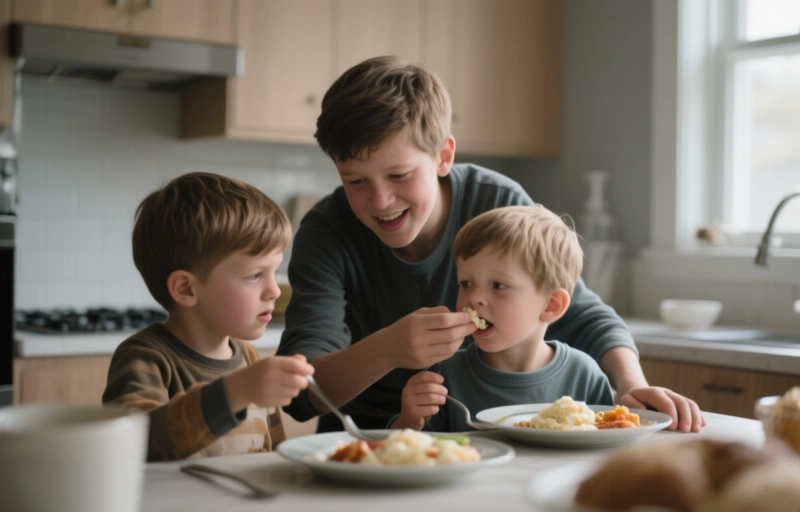
Discover how Sander's older brothers became his unexpected allies in managing food allergies. Learn practical strategies for creating sibling support systems that make allergy management a family mission.
When Sander was diagnosed with multiple food allergies at just three years old, his family faced a daunting new reality. Navigating birthday parties, school lunches, and family dinners suddenly required military-level planning. But what's truly remarkable about Sander's story isn't just his resilience—it's how his two older brothers stepped up to become his unexpected support system.
### The Sibling Safety Network
Sander's brothers, ages eight and ten, didn't just learn to recognize allergy triggers—they became proactive protectors. They check ingredient labels alongside their parents, remind Sander to wash his hands before eating, and have even learned to recognize early symptoms of an allergic reaction. Their involvement has transformed what could have been an isolating experience into a shared family mission.
"Kids often understand more than we give them credit for," says Lisa Bos, a nutrition scientist and allergy diagnostics specialist. "When siblings are educated about food allergies, they become powerful allies. They're often the first line of defense in social situations where adults might not be watching as closely."
### Practical Strategies That Work
- **The buddy system**: Sander's brothers take turns being his "allergy buddy" during playdates and school events
- **Label reading games**: The family turns grocery shopping into a game of "find the safe foods"
- **Emergency drill practice**: They regularly practice what to do if Sander has a reaction
- **Safe snack sharing**: The brothers help prepare and share allergy-safe versions of popular snacks
What's fascinating is how this approach benefits everyone involved. Sander feels less singled out, his brothers develop empathy and responsibility, and the entire family builds stronger communication habits. The brothers have even started educating their own friends about food allergies, creating ripple effects of awareness in their community.
### Beyond the Medicine Cabinet
Managing food allergies isn't just about avoiding triggers and having epinephrine auto-injectors ready—though those are absolutely essential. It's about creating an environment where the child feels normal, supported, and capable. Sander's story highlights how emotional support can be just as crucial as medical interventions.
When siblings become part of the solution, they help bridge the gap between medical necessity and social inclusion. They're the ones who can say, "Hey, that cookie has nuts—let's find you something else" in a way that doesn't make their brother feel different or left out.
### Creating Your Own Support System
Every family's journey with food allergies looks different, but Sander's story offers some universal takeaways. Start by having age-appropriate conversations with all children in the household. Use clear, simple language to explain what allergies are and why certain precautions are necessary. Make safety practices routine rather than exceptional—when everyone washes hands before meals and reads labels together, it becomes normal family behavior.
Consider creating specific roles for siblings that match their abilities and interests. Maybe one child becomes the "label checker" while another helps prepare safe snacks. The key is making them feel like valuable team members rather than bystanders.
Remember that consistency matters more than perfection. There will be mistakes and close calls—that's part of the learning process. What matters is creating an environment where everyone feels responsible for each other's wellbeing.
Sander's brothers show us that food allergy management doesn't have to rest solely on parents' shoulders. When we empower siblings with knowledge and responsibility, we're not just keeping one child safe—we're teaching all children about compassion, vigilance, and what it truly means to watch out for each other.