How High-Productivity Farms Reduce Livestock Mortality
Lisa Bos ·
Listen to this article~4 min
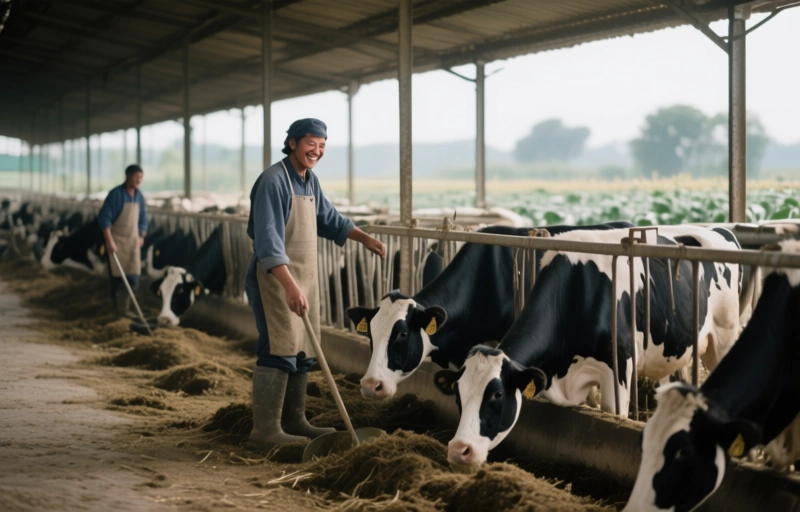
Contrary to common belief, high-productivity farms often show lower livestock mortality rates. Discover how advanced monitoring, precision systems, and trained staff create healthier animals and better outcomes in modern agriculture.
You might think that pushing for maximum productivity on a farm would come at a cost to animal welfare. It's a common assumption—more animals, more machines, more output must mean more stress and higher mortality rates, right? Well, recent data is telling a different story, and it's one that's changing how we think about modern agriculture.
It turns out that the farms producing the most aren't necessarily the ones losing the most animals. In fact, the relationship between high productivity and livestock mortality is more complex than we once believed. Let's unpack what's really happening.
### The Surprising Data on Farm Productivity
When researchers looked closely at the numbers, they found something counterintuitive. High-productivity operations often have *lower* mortality rates than their less-intensive counterparts. This isn't about cutting corners or pushing animals beyond their limits—it's about systems, precision, and attention to detail that actually benefits the livestock.
Think of it like a well-run hospital versus a crowded clinic. The hospital has more resources, better monitoring equipment, and specialized staff who can spot problems early. That's what's happening on these advanced farms. They're not just producing more; they're watching more closely.
### Why Better Systems Lead to Healthier Animals
So what makes the difference? It comes down to several key factors that high-productivity farms tend to implement:
- **Advanced monitoring technology** that tracks individual animal health metrics
- **Improved environmental controls** for temperature, humidity, and air quality
- **Precision feeding systems** that ensure optimal nutrition for each life stage
- **Early disease detection protocols** that catch problems before they spread
- **Staff training programs** focused on animal behavior and welfare indicators
These aren't just production enhancements—they're welfare enhancements that happen to boost output. The animals are healthier because their needs are met more precisely, and when animals are healthier, they naturally produce more.
### The Human Element in Modern Farming
Here's where it gets really interesting. The most successful operations invest heavily in their people. They don't just hire laborers; they train animal caregivers who understand stress signals, recognize early signs of illness, and know how to maintain optimal conditions.
One farm manager put it perfectly: 'We're not raising livestock; we're managing health. The production follows.' That mindset shift—from viewing animals as units of production to viewing them as living beings whose health directly impacts outcomes—makes all the difference.
### What This Means for the Future of Agriculture
This data challenges some long-held assumptions about intensive farming. It suggests that with the right systems, technology, and training, we can achieve both economic and ethical goals. The farms of the future won't choose between productivity and welfare—they'll recognize these as two sides of the same coin.
Of course, this doesn't mean every high-output farm is perfect. There are always outliers and bad actors. But the trend is clear: when done correctly, with proper investment in both technology and human capital, increased productivity can actually mean better outcomes for the animals involved.
The conversation about farming is changing. It's no longer just about how much we produce, but about how well we care for the living beings in our charge. And sometimes, doing better by them means we all do better in the end.