Goat Farm Pneumonia Risk: Fact Check and Health Insights
Lisa Bos ·
Listen to this article~5 min
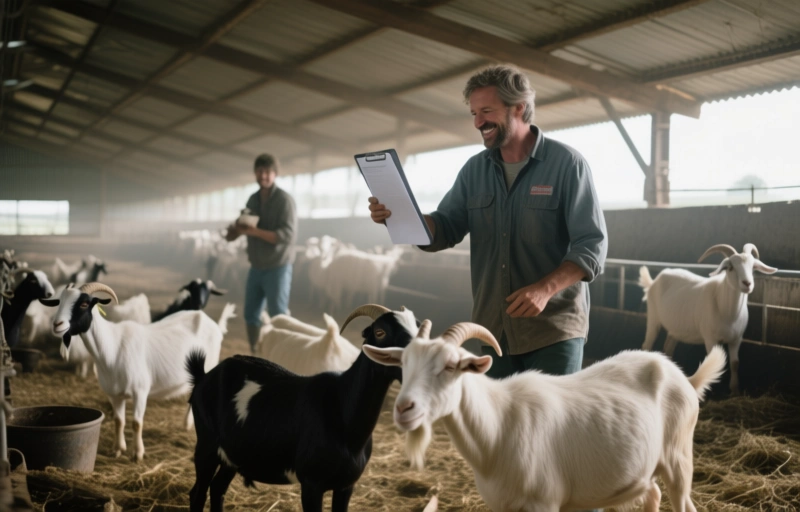
Does living near a goat farm increase your pneumonia risk? We fact-check the common concern, explaining the real science behind Q fever and separating specific occupational hazards from general community risk.
You've probably heard the rumors floating around. Maybe from a neighbor, or in a local community group online. The question pops up: does living near a goat farm actually increase your risk of developing pneumonia? It's a concern that feels both specific and oddly plausible, especially if you're someone who values clean air and good health. Today, we're going to dig into this claim, separate the facts from the fiction, and give you the clear information you need.
Let's start by acknowledging where this fear comes from. Farms are active places. There's dust, there are animals, and there are certain bacteria and particles in the air. It's natural to wonder what you might be breathing in if you live down the road. But is the connection to pneumonia real, or is it just an urban—or rather, rural—myth?
### Understanding the Real Risks
The core of this issue isn't really about goats themselves. It's about a specific type of bacteria called *Coxiella burnetii*, which can cause a disease known as Q fever. This bacteria can be found in the birth products of infected animals, including goats, sheep, and cattle. When these materials dry out, the bacteria can become airborne in dust. If inhaled by a person, it can lead to an infection that sometimes, though not always, presents as pneumonia.
So, the risk isn't a general 'pneumonia' risk. It's a specific risk of contracting Q fever, which is one potential cause of pneumonia among many. The vast majority of people who get Q fever recover completely, often without even knowing they had it. For a small percentage, especially those with pre-existing heart conditions or weakened immune systems, it can become more serious.
### How Close is Too Close?
Research suggests that the risk is highest for people who have direct, occupational contact with livestock. We're talking about farmers, veterinarians, and slaughterhouse workers. For the general public living in a farming community, the risk is significantly lower. Wind can carry contaminated dust particles, but typical residential distances—think several hundred feet or more—usually provide a substantial buffer.
Think of it like this: living near a busy highway exposes you to more car exhaust. Living near a farm exposes you to different environmental factors. It's about understanding the specific factors, not assuming blanket danger.
### Practical Steps for Peace of Mind
If you live near a goat farm or any livestock operation, there are sensible, non-alarming steps you can take.
- Stay informed about local animal health. Outbreaks of Q fever are rare and are typically managed by public health authorities.
- If you have a compromised immune system or chronic heart issues, have a conversation with your doctor about your specific circumstances.
- On extremely dry, windy days, you might consider keeping windows closed if you're directly downwind and very close to the operation.
Most importantly, don't let fear dictate your life. The health benefits of living in a rural or semi-rural area—like cleaner air overall, less noise pollution, and access to nature—often far outweigh this very specific and relatively small risk.
### The Bigger Picture on Respiratory Health
Focusing solely on goat farms misses the forest for the trees. Your overall respiratory health is influenced by so many more common factors.
> "Good respiratory health is built on daily habits, not just avoiding one potential source. It's about the air you breathe most consistently."
What has a much larger impact? Whether you smoke, the quality of ventilation in your home, exposure to mold or harsh cleaning chemicals, and even seasonal allergies. These are the factors you have direct, daily control over.
In the end, the connection between goat farms and pneumonia is nuanced. Yes, a specific pathogen exists that can, in some cases, lead to a pneumonia-like illness. But the risk to the average person living in the community is low. It's far more productive to focus on the fundamentals of health: a good diet, regular exercise, managing stress, and not smoking. Those actions will do more for your lungs—and your peace of mind—than worrying about the farm over the hill. Knowledge is power, and now you have it. You can make informed choices without unnecessary fear.