Experts Analyze Trump's Mental Health: A Clinical…
Lisa Bos ·
Listen to this article~3 min
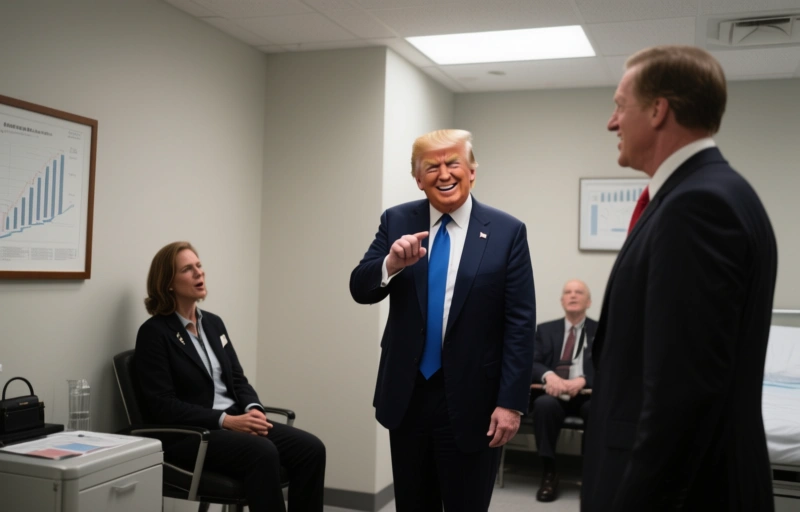
American experts draw a clinical comparison regarding a public figure's mental health, suggesting behaviors that would warrant sedation in care settings. This sparks a deeper conversation about evaluating leadership fitness.
Let's talk about something that's been buzzing around a lot lately. It's not your typical health blog topic, but it's one that touches on how we discuss and diagnose mental health in public figures. Recently, some American experts made a pretty stark comparison regarding former President Donald Trump's mental state.
They suggested that in nursing homes, patients presenting with a similar clinical picture would be heavily sedated. That's a strong statement, isn't it? It pulls the conversation out of the political arena and into a clinical one, which is a shift worth examining.
### The Clinical Comparison
When medical professionals look at behavior, they use established frameworks. The experts' comment implies they are observing signs that, in a standard geriatric or psychiatric care setting, would trigger a specific medical response to ensure safety and stability. It's not about politics; it's about applying a consistent diagnostic lens.
This kind of analysis raises bigger questions. How do we, as a society, evaluate the mental fitness of our leaders? And should there be a standardized, non-partisan process? It's a conversation that goes beyond any single individual.
### Why Public Figure Mental Health Matters
We talk a lot about physical health checks for presidents. But mental acuity is just as critical for the immense responsibilities of the office. The stress is constant, the decisions are world-altering, and the need for clear, consistent judgment is non-negotiable.
- The role demands immense cognitive load and emotional regulation.
- Decision-making under pressure must be sound and predictable.
- The well-being of the individual directly impacts national and global stability.
Ignoring this aspect is like checking a pilot's eyesight but not assessing their ability to handle turbulence. Both are essential for a safe journey.
### Navigating the Conversation Respectfully
It's easy for this topic to become a partisan football. But the core issue is a human one. Discussing mental health should come from a place of concern and clinical understanding, not ridicule. As one observer quietly noted, "When we medicalize public behavior, we must do so with rigor and empathy, not as a weapon."
The goal isn't to armchair diagnose but to advocate for transparency and safeguards. Many professions have regular fitness-for-duty evaluations. It's not unreasonable to ask if the highest office in the land should have similar, bipartisan safeguards in place. This isn't about disqualifying anyone; it's about ensuring a baseline of stability for the incredibly difficult job.
In the end, this discussion opens a necessary door. It moves us from whispered rumors to a more structured dialogue about capacity, responsibility, and how we protect both the individual in the spotlight and the public they serve. It's a complicated, sensitive issue, but perhaps it's one we need to grow more comfortable addressing, with care and without stigma.