Cross-Reactivity Allergies: When Your Body Confuses Foods
Lisa Bos ·
Listen to this article~3 min

Cross-reactivity allergies occur when your immune system confuses proteins in foods with similar allergens. Learn about common pairs, diagnosis challenges, and management strategies for this confusing condition.
You know that feeling when you eat something and your body just says 'nope'? For hundreds of thousands of people, that reaction isn't always straightforward. It's called cross-reactivity, and it's more common than you might think.
Take Dries, a 30-year-old reality TV contestant from Belgium. His allergy story made lab technicians say they'd never seen anything like it. But here's the thing—his experience isn't as rare as you'd imagine.
### What Exactly Is Cross-Reactivity?
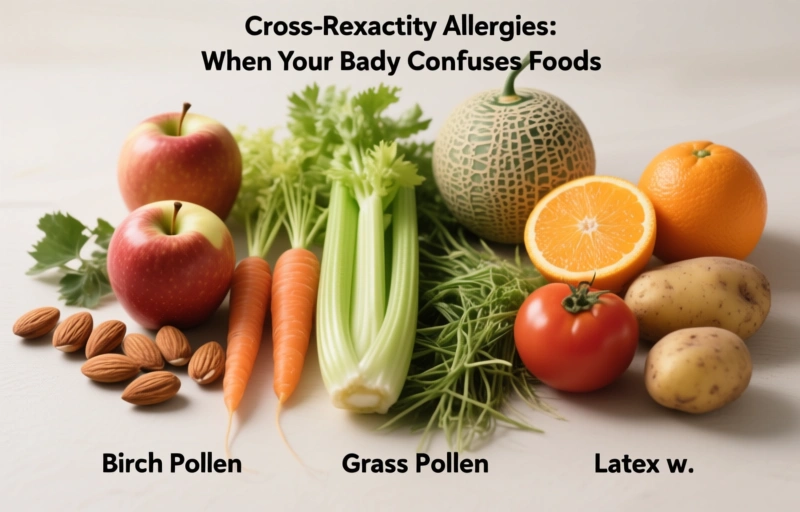
Think of your immune system like an overzealous security guard. Sometimes it mistakes harmless proteins in certain foods for dangerous invaders it's already seen elsewhere. If you're allergic to birch pollen, for example, your body might react to apples, carrots, or almonds because their proteins look similar.
It's like your immune system saying, "Close enough!" and sounding the alarm anyway. This confusion happens because proteins in different substances can share similar structures.

### Common Cross-Reactivity Pairs You Should Know
- **Birch Pollen** with apples, carrots, celery, almonds, and hazelnuts
- **Grass Pollen** with melons, oranges, tomatoes, and potatoes
- **Latex** with bananas, avocados, kiwis, and chestnuts
- **Dust Mites** with shellfish like shrimp and crab
These reactions can range from mild oral itching (often called oral allergy syndrome) to more severe systemic responses. The severity often depends on how your particular immune system decides to react.
### Why Diagnosis Can Be Tricky
Here's where it gets complicated. Standard allergy tests might not always catch cross-reactivity. You could test negative for a specific food allergy but still react because your body's confusing it with something else.
That's what made Dries's case so unusual to the lab technicians. His pattern of reactions didn't fit the typical profiles they usually see. But unusual doesn't mean unique—many people walk around with similar confusing allergy profiles without proper explanation.
As one specialist noted, "The human immune system has its own logic that doesn't always match our medical textbooks."
### Living With Cross-Reactive Allergies
If you suspect you might have cross-reactivity, don't panic. Start by keeping a detailed food and symptom diary. Note what you ate, when you ate it, and any reactions that followed. Patterns often emerge over time.
Cooking or processing foods can sometimes break down the problematic proteins. Someone who reacts to raw apples might tolerate applesauce or baked apple pie. Heat changes the protein structure just enough that your immune system might not recognize it.
### When to Seek Professional Help
If you're experiencing regular reactions, especially anything beyond mild mouth itching, see an allergist. They can perform more comprehensive testing and help you develop a management plan.
Remember that allergy profiles can change over time. What bothers you today might not bother you next year, or new sensitivities might develop. It's a conversation worth having with a professional who can guide you through the confusing world of immune responses.
The bottom line? Your body's reactions tell a story. Cross-reactivity might be a confusing chapter, but with proper understanding and management, you can learn to navigate it safely.